
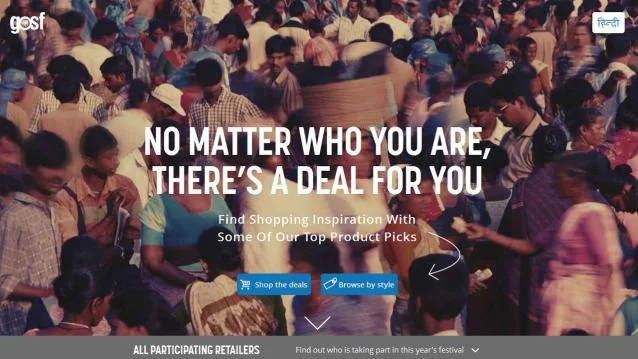
Google India launched the Great Online Shopping Festival, or GOSF, in 2012 as a coordinated event intended to introduce more people to online shopping. Retailers and online services promoted offers during the festival, while the campaign encouraged consumers to explore digital payments and e-commerce. A headline saying the event “gave online sales a push” needs careful context: promotional claims and survey reports are not the same as independently measured, economy-wide sales growth.
What the festival was
Google India described GOSF as a Cyber Monday-style event for India, with participating portals offering deals. The company later wrote that the festival had been created to encourage online shopping and build consumer confidence. Those statements explain the organizer’s purpose and its view of the campaign. They should be attributed to Google rather than treated as neutral proof that the event caused a specific change in national sales.
A shopping festival can create a short period of discounts and advertising, but measuring its impact requires more than counting participating stores or page visits. A strong report would define the sales measure, the comparison period, the participating retailers, and whether the figures represent orders, completed purchases, or transaction value. It should also distinguish purchases shifted from another date from genuinely incremental demand. Without those details, broad claims about the whole e-commerce market remain uncertain.
How shoppers can evaluate an online sale
Discount events can help buyers compare products, but a countdown clock or “limited-time” label is not evidence that an offer is good value. Check the seller’s identity, final price including delivery and taxes, return terms, warranty, and secure payment options. Compare the same model across reputable retailers and confirm the product variant before ordering. Be cautious of unexpected messages requesting payment outside the retailer’s checkout or asking for one-time passwords.
For shoppers new to e-commerce, use a unique password, enable available account security, and keep order confirmations. If a deal seems unusually cheap, verify the URL and seller before entering payment details. A genuine event should still provide clear terms and a way to contact the retailer. These precautions are useful well beyond a one-time festival.
What remains of GOSF
The festival is part of India’s early mainstream e-commerce history, when platforms were still teaching many first-time customers how to browse, compare, pay, and receive goods online. The archived campaign is a historical case study, not a current shopping event or a predictor of today’s online sales. Modern shoppers should evaluate current retailers and offers on their own terms.
Sources and limits
Google India’s archived posts describe the festival’s launch and the company’s later decision to end the program. Those posts document Google’s stated intent and retrospective view. They do not independently prove a quantified causal sales effect, so this rewrite avoids preserving unsupported market-wide claims.

