
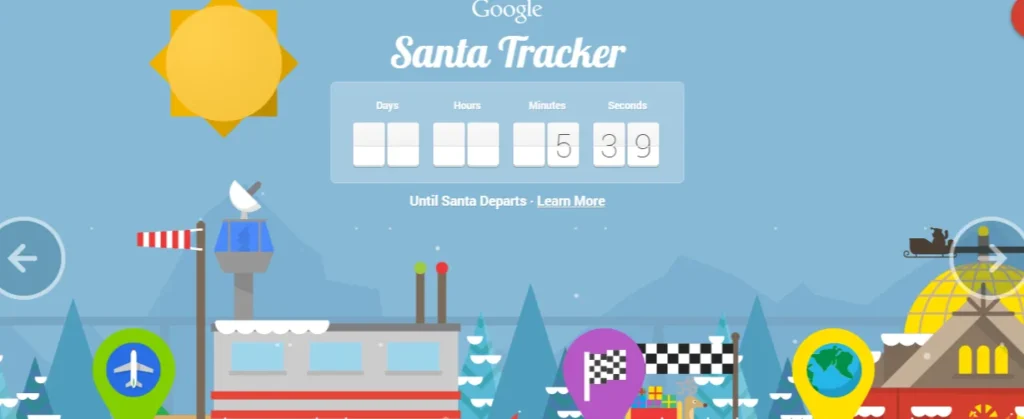
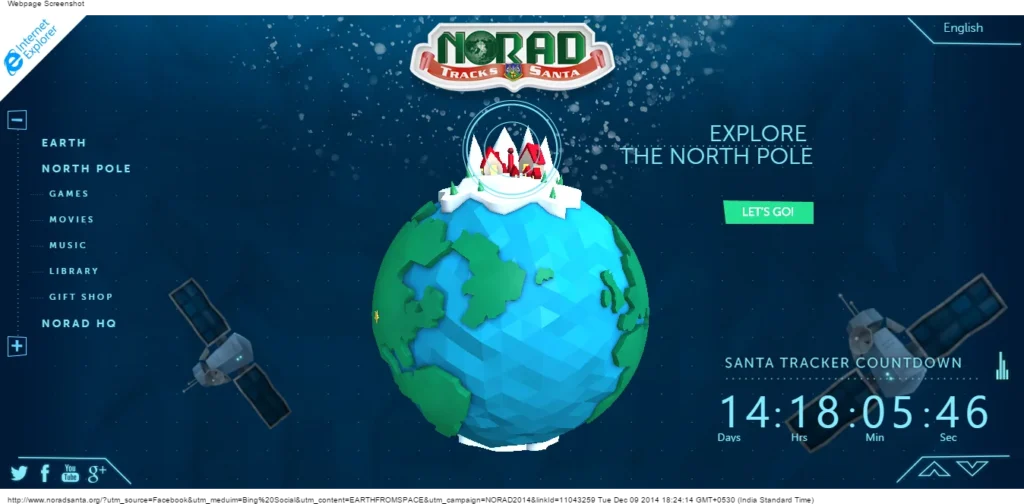
In December 2014, Google and Microsoft both invited families to follow holiday countdowns and Santa-themed experiences online. Google’s Santa Tracker combined a countdown with seasonal games and a map-based Christmas Eve experience. Microsoft’s Bing Search Blog published its own reminder about tracking Santa with Bing. These were entertainment projects, not real-time surveillance or evidence about a real person’s location.
What Google and Bing offered
Google’s December 2014 blog posts described activities leading up to Christmas Eve and the company’s Santa Tracker. The posts connected the experience to Google Maps and its Android app, while Microsoft’s Bing Search Blog told readers when to return to follow the seasonal event. Both companies used familiar mapping and search products to turn the holiday into an interactive web experience.
These historical pages are useful examples of how major technology companies used seasonal content to introduce audiences to their services. They should not be mistaken for a current feature guide: pages, applications, and supported devices change over time. Links to old app stores or screenshots may no longer work, and a past app listing does not prove that the app is still maintained or available.
Family-friendly browsing tips
Parents can use seasonal websites as a chance to discuss how maps and digital interfaces present information. Explain that Santa tracking is a playful story created for entertainment. If a child is using a website or app, check the publisher, privacy information, and permissions, and avoid entering a child’s real name, address, school, or other personal details into a holiday activity unless you understand why that information is needed.
Use official company pages or app stores rather than third-party downloads that imitate a familiar brand. For children, keep account settings age-appropriate and review whether an app includes advertising, purchases, external links, or social features. A browser-based activity may be preferable if it avoids installing software, but families should still check the page’s domain and current privacy notice.
Why these countdowns became memorable
Interactive countdowns gave users a reason to return each day, while maps, games, and animations made the wait for Christmas more engaging. The point of comparing Google and Bing is not to declare a winner; each campaign reflected how its company presented search and mapping at the time. The content also shows how technology brands can make playful experiences without requiring readers to believe that a map is literally tracking Santa.
Sources and limits
Google’s official blog archive documents its 2014 Santa Tracker campaign, and Microsoft’s Bing Search Blog records its own seasonal tracking post. These sources confirm what the companies published, not any claim about real-world tracking. Current availability and privacy terms should be checked on the official service before use.

