
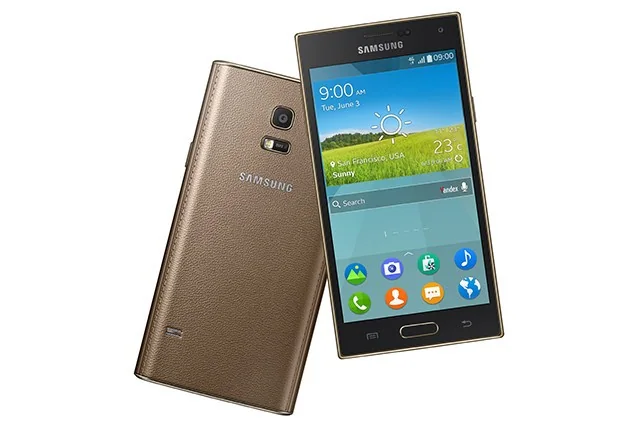
Samsung introduced the Samsung Z in June 2014 as its first commercially available smartphone powered by Tizen. The company initially planned a third-quarter launch in Russia, with other markets to follow. It later postponed the Russian launch, leaving the Samsung Z as a notable example of how difficult it can be to establish a new mobile platform alongside Android and iOS.
What Samsung announced
Samsung’s launch announcement described a 4.8-inch HD Super AMOLED display, a quad-core 2.3 GHz processor, LTE Cat 4 connectivity, and the Tizen operating system. Samsung presented the phone as a premium device and said it would appear at the Tizen Developer Conference in San Francisco. The company also planned app-development initiatives and a Tizen Store promotion to encourage developers to build for the platform.
The key distinction is between an announced product and a broadly available one. Samsung’s original press release said the Samsung Z was expected in Russia in the third quarter and might expand to other markets. The subsequent delay meant that those plans did not translate into an immediate retail launch. It is more accurate to describe the Samsung Z as announced and delayed than to imply that it became a widely sold phone.
Why a new phone platform needs more than hardware
A phone can have capable hardware and still struggle if buyers cannot find the apps and services they expect. Developers weigh the size of the potential audience, the tools available, the effort needed to support another platform, and the long-term prospects of the ecosystem. Consumers, meanwhile, look for familiar apps, timely software support, accessories, and a clear upgrade path. A new operating system must address both sides at once.
Tizen was not limited to phones. Samsung later used the platform in other connected products, including smart televisions. That broader role helps explain why a delayed smartphone launch does not by itself define the entire platform’s history. Samsung’s later official account describes Tizen as a platform used across connected device categories.
How to read this story today
The Samsung Z is a discontinued historical device, not a current buying recommendation. Old listings may be incomplete, and a handset’s present-day compatibility, app availability, and security support should not be assumed from its launch specifications. If researching one for collection or repair, check the model number, network bands, parts availability, and whether any required services still function.
This rewrite separates Samsung’s documented launch plan from the later delay and avoids treating a 2014 announcement as proof of broad retail availability. The Samsung Z remains useful as a case study in the challenges of launching a mobile operating system and building an app ecosystem at the same time.

