
Historical archive: In 2013, Canonical presented Ubuntu for Phones as a touch-first mobile interface built around edge gestures, content-focused screens and a longer-term goal of convergence: a compatible phone could provide a desktop-style Ubuntu experience when connected to a monitor, keyboard and mouse. The announcements describe the project’s plans and early software milestones at that time; they are not instructions for setting up a phone today.

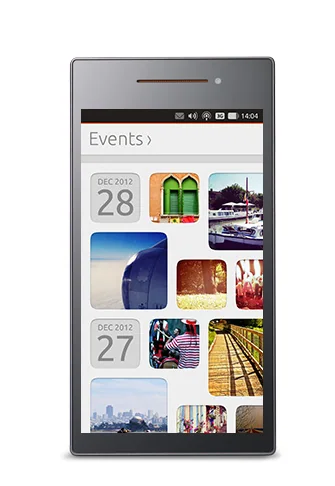
A phone interface built around edge gestures
Canonical’s January 2013 announcement described gestures from all four edges of the screen as a central part of the interface. The left edge was intended to provide quick access to apps, while other edge gestures helped users move between content and open controls. Canonical also promoted a global search across apps and content, native and web apps, and a welcome screen with personalised artwork. The design aimed to keep controls out of the way until needed and make swiping the main method of navigation.
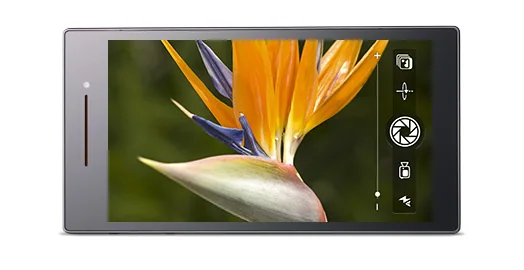
These were interface goals from Canonical’s announcement, not evidence that every feature was present on every device. The company positioned the system for both basic smartphones and higher-end devices, with manufacturers, mobile operators and chip vendors expected to participate in bringing compatible hardware to market.
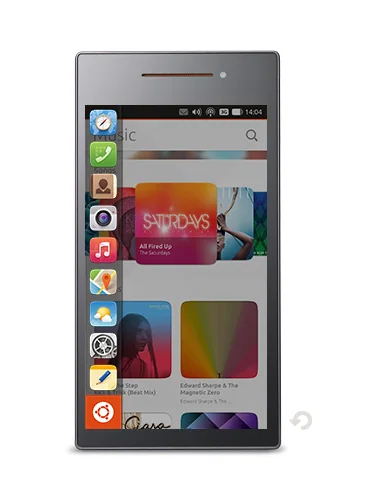

What “convergence” meant
Canonical’s distinctive proposal was that a high-end phone could act as more than a handset. When docked to a monitor with a keyboard and mouse, it was intended to offer a PC-like Ubuntu session, using the same underlying system and accessing phone capabilities. That was an ambitious product direction, and depended on compatible hardware, software and partner support. It should be read as a planned capability rather than a promise that any Ubuntu phone could replace a desktop computer.

The Ubuntu 13.10 milestone
In October 2013, Canonical said Ubuntu 13.10 included its first true mobile release, alongside the desktop release. The announcement highlighted a mobile interface, core apps such as a browser and calendar, and an SDK for native and HTML5 development. Canonical said the release would let device makers and carriers integrate Ubuntu into phones in 2014. That wording matters: the release was a software milestone and a platform for partners, while commercial phone availability depended on those partners and supported devices.
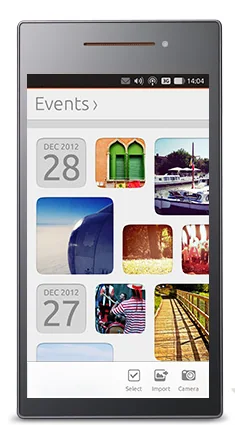
Canonical’s announcement also identified Nexus devices for the official Ubuntu 13.10 phone build and noted community support for additional devices. Those are historical compatibility details, not current installation guidance. Old phone images, device ports and instructions can be unsafe or incompatible with modern hardware, so readers should not flash a device based on this archive.
Why this remains a historical story
Ubuntu for Phones is best understood as an attempt to rethink the boundary between a smartphone and a PC. Its edge-driven interface and convergence idea were notable parts of Canonical’s mobile strategy in 2013. The launch announcements document that vision and the software milestone; they do not establish present-day device availability, downloads, security updates or support. Check current official documentation before relying on any legacy mobile software.

