
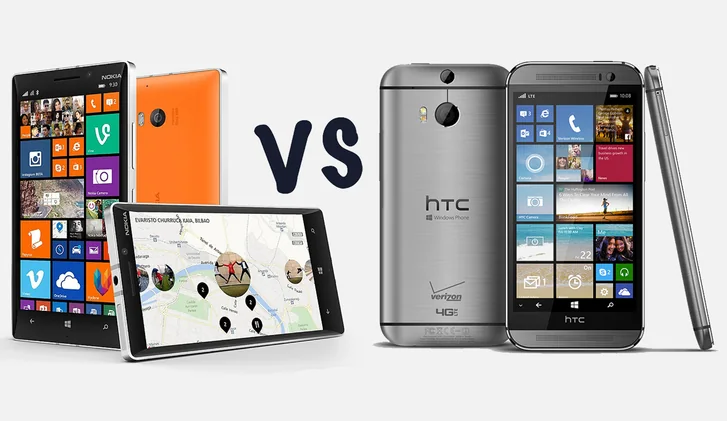
The HTC One (M8) for Windows and Nokia Lumia 930 were two premium smartphones from the Windows Phone 8.1 period. They are now legacy devices, so this comparison is useful as a historical look at how manufacturers approached the platform in 2014—not as a recommendation to buy either phone for daily use today. Their present condition, carrier compatibility, application support and security-update status can vary, and should be checked independently before anyone purchases or relies on one.
Two designs for the same Windows Phone era
HTC announced its One (M8) for Windows in August 2014 as a Windows Phone version of its flagship M8 design. HTC described an all-metal unibody and highlighted features carried over to this edition, including BlinkFeed, BoomSound speakers, the Duo Camera with UltraPixel technology, Video Highlights and a wide-angle 5-megapixel front camera. The company also announced Verizon as the exclusive US launch partner at release. Those are manufacturer launch claims and describe the original US product positioning; they do not establish current network availability.
The Lumia 930 was Nokia’s flagship Windows Phone 8.1 model. Microsoft and Nokia’s launch materials emphasized its 20-megapixel PureView camera with ZEISS optics and optical image stabilization. The published Lumia 930 datasheet also lists Windows Phone 8.1 and camera features including 1080p video recording. The phone’s imaging emphasis made it a notable alternative for buyers who prioritized still photography and video specifications over HTC’s highlighted audio, case and camera-effects features.
What the official specifications can tell us
On paper, these phones shared the same broad operating-system generation, but the experience was not identical. HTC integrated selected HTC experiences into its Windows version: BlinkFeed appeared in the Live Tile layout, while the company also promoted its front-facing speakers and Duo Camera effects. The Lumia 930’s documented selling points centered more heavily on PureView imaging and Nokia’s camera software. A specification sheet can identify advertised components and features; it cannot establish which camera produced better results in every lighting condition or which handset feels faster after years of wear.
Windows Phone 8.1 was Microsoft’s mobile platform at the time. Microsoft introduced the release and its new features in 2014, while Nokia announced the Lumia 930 as part of its Windows Phone 8.1 lineup. That shared software base makes the comparison meaningful historically, but it should not be confused with Android compatibility or with today’s Windows operating systems. A device’s original platform name also does not guarantee that its old apps, online services or security protections remain available.
Which one made sense in 2014?
For a buyer choosing between new phones in 2014, the HTC One (M8) for Windows had a strong design and multimedia pitch: metal construction, dual front speakers, HTC’s camera effects and the Dot View accessory ecosystem. The Lumia 930 offered a clear camera-led proposition with a high-resolution PureView sensor and optical stabilization. The right choice depended on carrier availability, price, preferred hardware features and personal testing—not on a universal winner.
Today, consider both devices collectibles or projects rather than supported everyday phones. Before using one, verify that its cellular bands work with the intended carrier, confirm that required services still function, and avoid signing into sensitive accounts if the device cannot receive security updates. Battery health and replacement parts matter as much as the original specifications on a decade-old handset. These practical checks are more relevant now than the launch-era feature comparison.
Bottom line
The HTC One (M8) for Windows and Lumia 930 represented two distinct interpretations of a Windows Phone flagship: HTC emphasized premium materials and multimedia features, while Nokia made imaging central to its Lumia identity. Official product materials support those differences, but they do not justify claims that one was objectively superior in every respect. Use this page as an archival comparison, and consult current carrier and repair information before trying to activate or restore either phone.

