
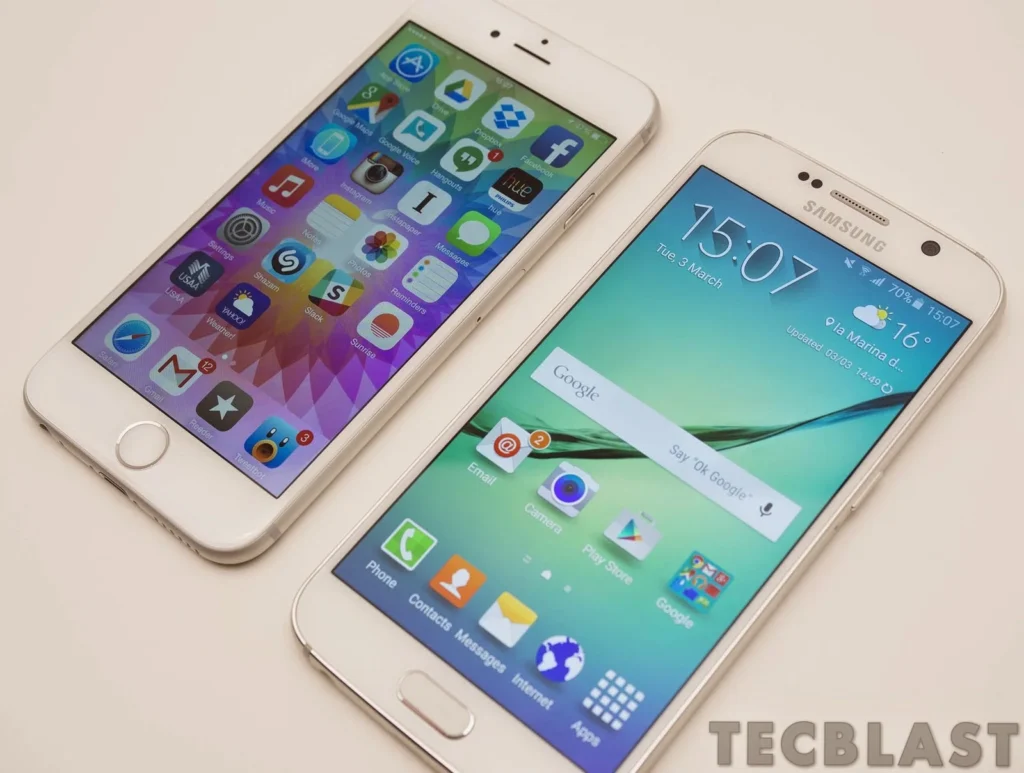
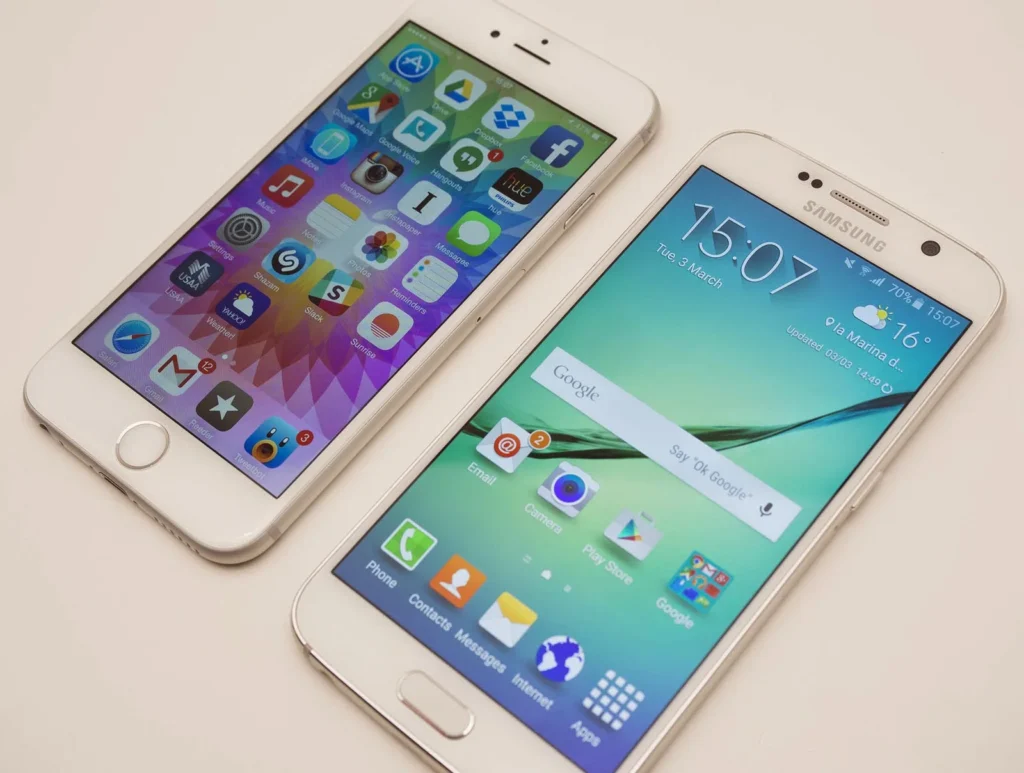
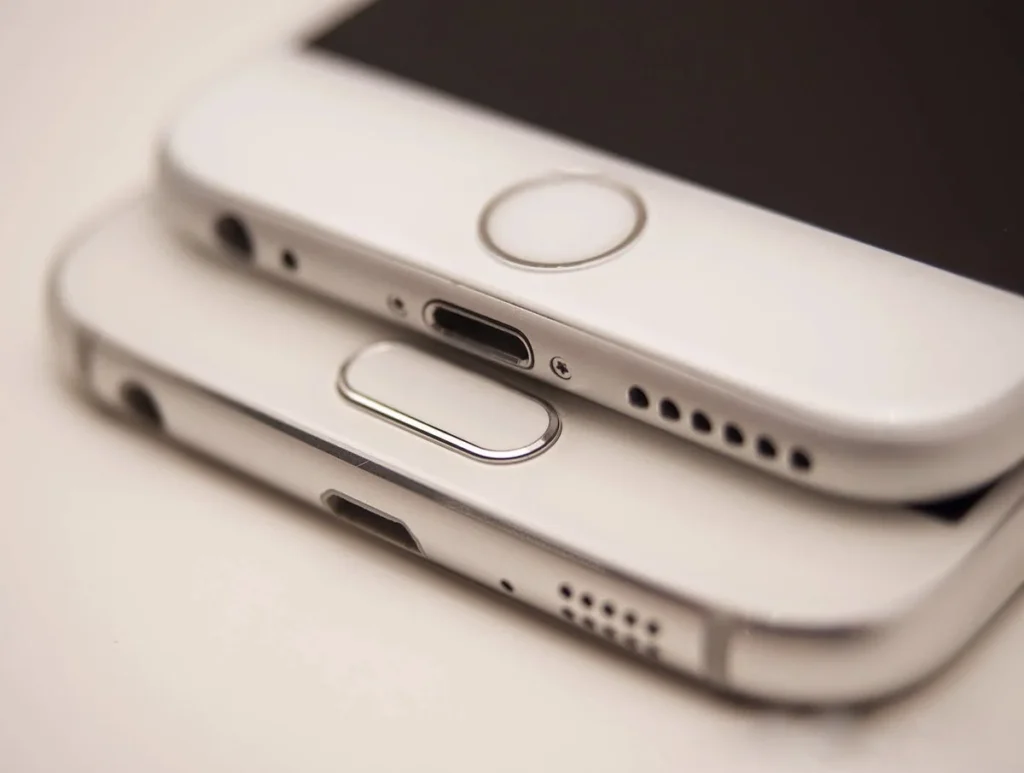
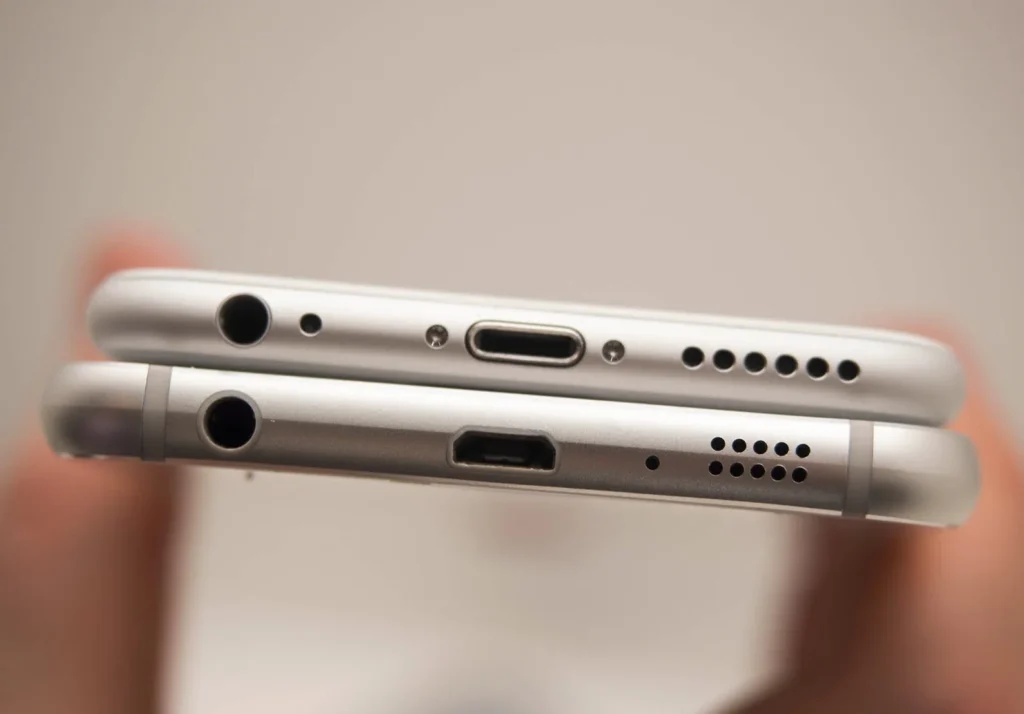
Viewed from the bottom edge, Samsung’s Galaxy S6 and Apple’s iPhone 6 shared a few visible cues: a metal frame, a centered charging port, a headphone jack and speaker openings. That resemblance was a narrow design observation from 2015, not evidence that the phones were identical or that one copied the other. Their screens, operating systems, hardware choices and ecosystems were distinct.
What Samsung announced
Samsung unveiled the Galaxy S6 on March 2, 2015. Its official specifications list a 5.1-inch Quad HD Super AMOLED display, a 16-megapixel rear camera with optical image stabilization, a 5-megapixel front camera and Android 5.0 Lollipop at launch. Samsung also offered 32GB, 64GB and 128GB storage configurations. Those are launch-era specifications and should not be read as a current phone recommendation.
How the iPhone 6 differed
Apple introduced the iPhone 6 in 2014. Apple’s technical specifications list a 4.7-inch display with a 1334-by-750 resolution, the A8 chip, an 8-megapixel rear camera and storage options that included 16GB, 32GB, 64GB and 128GB depending on the model and market. The iPhone ran iOS, while the Galaxy S6 ran Android. Their software, app distribution and account services were therefore different even when the exterior shared common smartphone design elements.
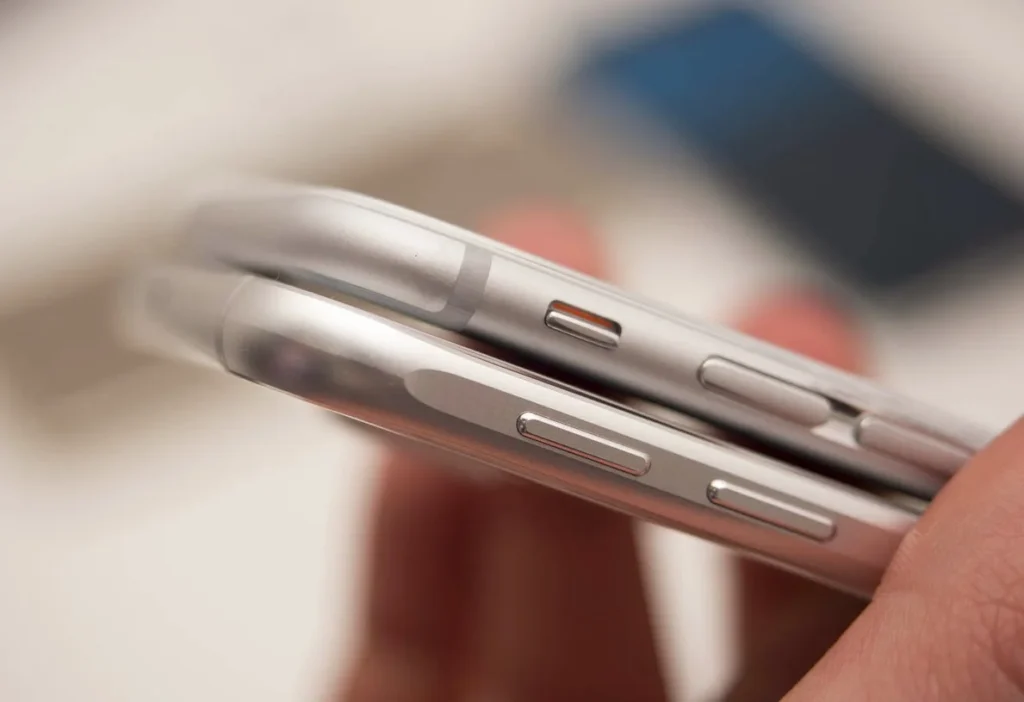
Compare the experience, not one angle
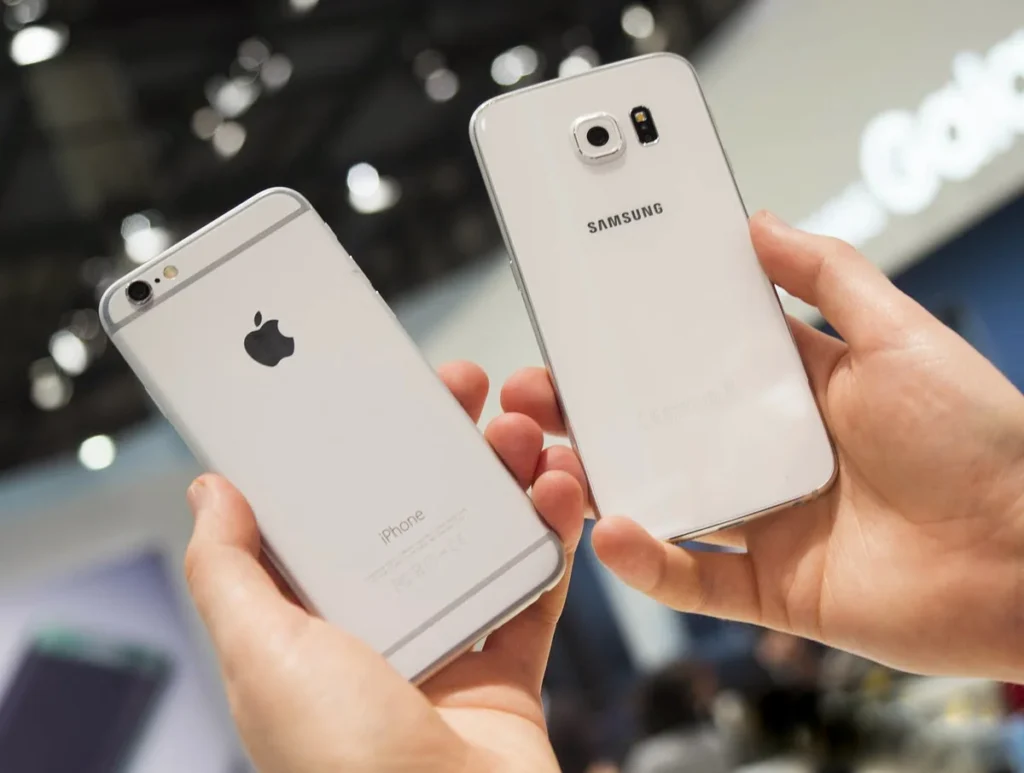
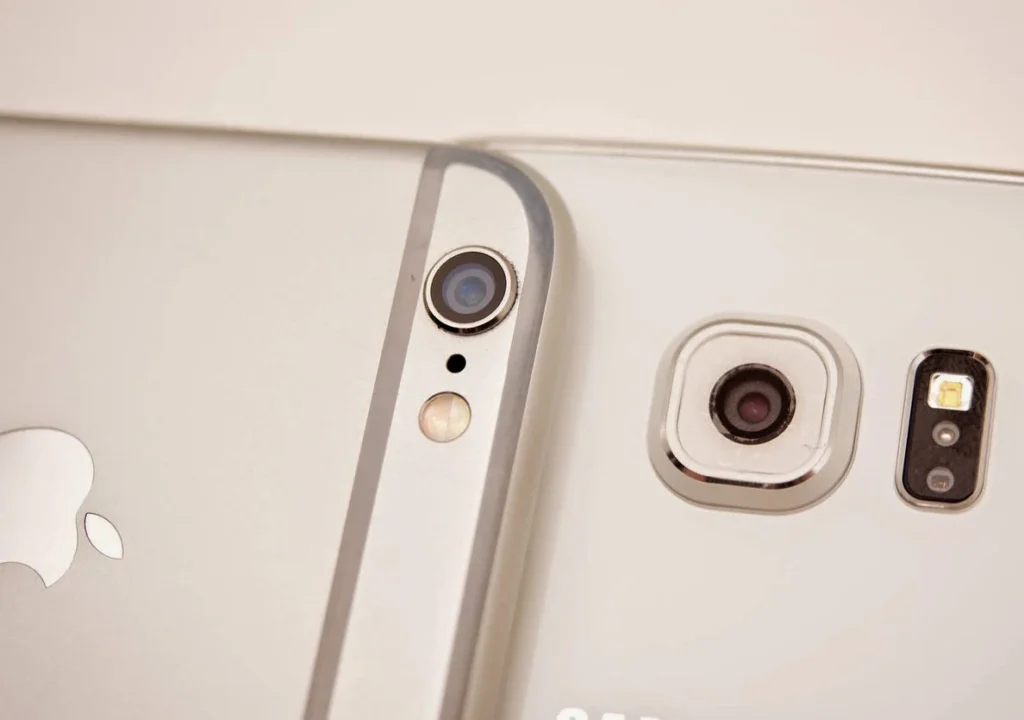
A bottom-edge view leaves out most of the details people use to choose a phone. Display size and resolution, camera performance, battery life, software support, repair options and available apps matter more than whether ports appear in a similar order. Samsung’s S6 also used a glass back and a metal frame, while Apple used its own rounded aluminium enclosure. Each design involved trade-offs in grip, durability and serviceability.
Historical context
The comparison belongs to the 2014–2015 smartphone generation. Both models are now legacy devices, and their original operating systems no longer represent the security or app support expected of a current phone. Check manufacturer support information before using either as a daily device, especially for banking, work or sensitive accounts.
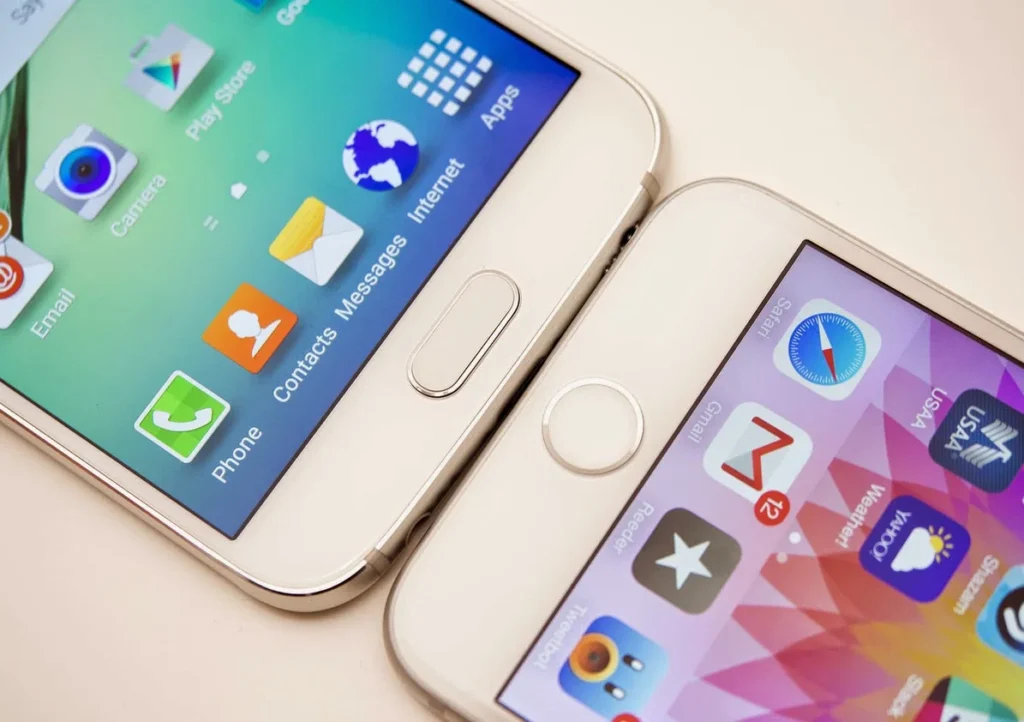
The useful takeaway is simple: visual similarities can be real without making two products interchangeable. For a present-day buying decision, compare current models using independent tests and current support policies. This archive article documents the launch-era design discussion and specifications; it does not rank the Galaxy S6 and iPhone 6 as current purchases.

