
In March 2015, Facebook introduced Topic Data, an analytics product developed with DataSift for selected business partners. Contemporary reporting described it as a way for marketers to learn about discussion trends around events, brands and subjects. The headline metaphor of a “data firehose” overstated what partners received: the product was reported to return aggregated insights rather than a searchable feed of named individuals’ posts.
What Topic Data was designed to show
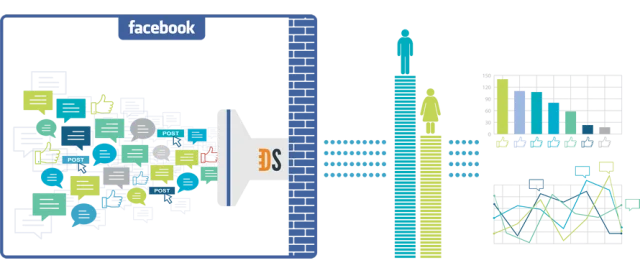
Facebook described Topic Data as a way for marketers to understand what audiences were discussing on the platform. Analytics providers could ask questions about subjects and receive summaries such as discussion volume, broad audience characteristics or related themes. The point was market research and trend analysis, not reading a particular person’s post or contacting an individual because they mentioned a product.

The DataSift partnership
Facebook worked with DataSift, which processed Topic Data and made insights available through a limited set of analytics partners. The initial launch was reported for the United States and United Kingdom. A later DataSift partner announcement described its customer service as anonymized and aggregated. These sources document the companies’ stated product design and commercial arrangement; they are not independent tests of every query, safeguard or downstream use.
Aggregate results are different from raw access
Aggregate analytics can help a company compare broad patterns without receiving names attached to each post. That distinction is important, but it does not mean the product had no privacy implications. People may reasonably ask which posts were included, what audience settings applied, whether small groups could be inferred and how partners handled query results. A vendor’s use of words such as “anonymous” or “privacy-safe” should be treated as a description of its approach, not proof that re-identification is impossible.
What advertisers could and could not infer
Topic Data was presented as an insights product for understanding subjects, brands and events. It was not reported as a tool that directly handed marketers a list of individual users who had written specific posts. Facebook’s representative told TechCrunch that results were analyzed interpretations rather than actual underlying topic data. Marketers might use broad trends to inform planning, but that is distinct from identifying or directly targeting a person based on a private conversation.
Why the product drew attention
Social platforms contain discussions that are not publicly visible to ordinary web search. Giving outside analytics firms a way to summarize that activity raised questions about expectations and transparency, even when companies said the output was aggregated. The debate illustrates a broader privacy principle: privacy depends not only on whether a report includes names, but also on the data sources, group sizes, safeguards, permitted uses and retention practices behind it.
How to read this archived announcement
Topic Data was a 2015 product initiative and should not be assumed to be active today. This article reports what Facebook and its partners said at launch, alongside contemporary reporting; it does not independently verify their privacy controls. Meta’s current privacy policy describes current services and should not be retroactively treated as documentation of the 2015 product. The accurate conclusion is narrower: Facebook and DataSift offered selected partners aggregate discussion insights, while the privacy assurances remain company claims that require careful attribution.

