
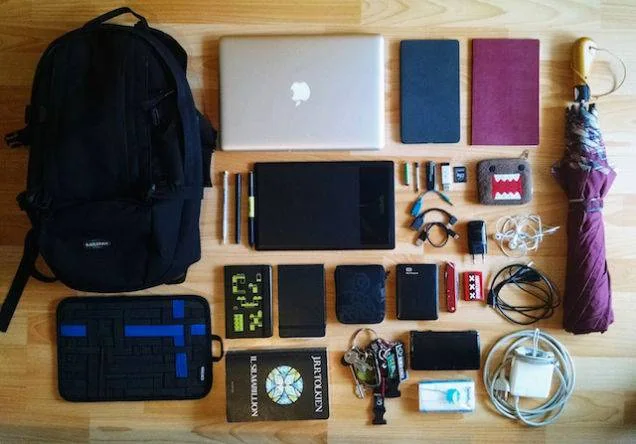
A 2014 “daily bag” feature offered a small look at how one design student organized a day of classes. The owner, who posted as DgnKoopa, shared a photograph of an Eastpak backpack and described carrying a MacBook, notebook, umbrella, pens, a Wacom Bamboo tablet and stylus, USB storage, adapters, a charger, headphones, books, a portable hard drive, keys, and a Nintendo 3DS. This is one person’s self-reported setup, not a universal packing list or a product test.
Why the contents tell a story
The bag combined tools for coursework with everyday items. A laptop and drawing tablet supported digital work, while notebooks and pens gave the student a paper fallback. Cables, memory cards, and a portable drive helped move files between devices. The umbrella, wallet, tissues, and keys show how a “tech bag” still has to serve the ordinary needs of getting through a day away from home.
Several details make the list distinctly historical. The post referred to a Wacom Bamboo tablet and a Nintendo 3DS, and included a separate laptop charger and portable hard drive. Those products reflect how students carried creative tools in 2014, before cloud storage and thinner devices changed what many people packed. The point is not that this exact collection remains ideal; it is a record of one student’s workflow and the accessories available at the time.
Build a bag around your own routine
A useful everyday bag starts with the tasks you actually do. List the devices and materials needed for class or work, then add essentials such as water, weather protection, medication, and a charger if you need one. Keep small items in a pouch so adapters and memory cards are easy to find, and avoid carrying backup hardware that is unlikely to be used. A bag should protect its contents without becoming heavier than necessary.
For laptops and tablets, use a padded compartment or sleeve and keep liquids in a separate, sealed pocket. Back up important files to a secure location rather than relying on one portable drive. If you carry removable storage, label it without exposing personal information. Check that chargers and cables are compatible with the devices you own; old product names in a historical post are not a recommendation to buy discontinued accessories.
A personal snapshot, not an endorsement
The original feature was adapted from a user-submitted “what’s in my backpack” post. The photo and item list document what one contributor chose to carry, but they do not establish how durable the Eastpak bag was or how well each accessory performed. Readers should treat the profile as a point of inspiration and choose current equipment based on their own needs, comfort, and budget.
Sources and limits
The contributor’s Flickr post contains the original backpack image and identifies it as a graphic-design student’s bag. Cocoon Innovations’ press-room archive lists Lifehacker’s original feature by title and date. The item inventory is a personal account, not independently verified specifications or a sponsored product recommendation.

